
Pre-employment functional assessments in Perth
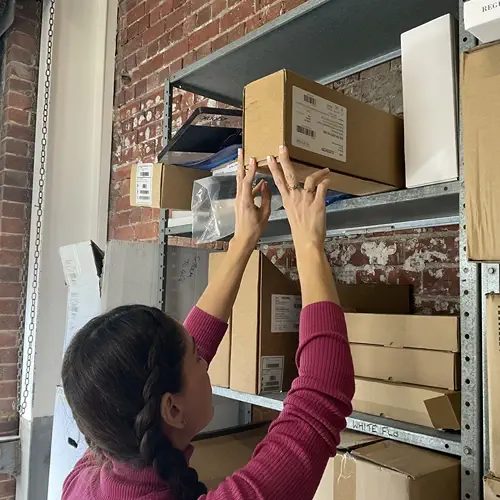
If you’re hiring in Perth, a position description might tell you that a storeperson handles stock. It rarely tells you which shelves they reach, how far they carry a carton or when they use a trolley. Those details shape the assessment we arrange for your candidate.
At Corporate Work Health Australia, our allied health professionals design functional capacity evaluations around the physical requirements of the role. You receive a written report explaining how the candidate performed against the agreed duties. Discuss your Perth referral.
Pre Employment Functional Assessment
Functional Capacity Evaluation
See options for assessments completed at a clinic or at your workplace
Where the assessment can take place
Ask about the venue that suits your referral and the tasks being assessed.
- A physiotherapy or osteopathy practice, with the location agreed at booking.
- A dedicated assessment or consultation room at your workplace.
What the assessor considers
- Medical history relevant to the assessment.
- Previous injuries relevant to the duties.
- Range of movement.
- Strength.
- Aerobic fitness.
- Stability through the trunk and shoulders.
- Ability to hold or move through working positions such as reaching, squatting or climbing.
- Lifting and carrying tasks selected for the role.
How to arrange testing
- Tell us what decision the assessment needs to inform and which physical duties the person will perform.
- We agree on the tests for that role and whether the referral concerns a new starter or someone returning to work.
- Arrange a booking for the candidate or worker once the scope and venue are settled.
- Receive a detailed report on whether the person demonstrated the agreed physical requirements.
Investment
Call 1300 951 519 or email admin@corporateworkhealth.com to request a quote.
Workstation Assessment and Training
Work From Home Assessment and Training
Online Ergonomic Assessment and Training
Vehicle Ergonomic Assessment And Training
Ergonomic Training For Health Professionals
Corporate Membership Program
Ergonomic Train The Assessor Training
FREE Ergonomic Posters & FREE Evaluation
Which physical demands belong in a Perth job description?
Start with a shift that someone in the job would recognise. Perth’s intermodal freight terminals are concentrated around Kewdale and Forrestfield, where road and rail freight meet. A business supporting that trade might employ several people under the title of storeperson. One could pick small parts from shelving while another receives palletised goods and uses a trolley for the last few metres. If both referrals simply say “heavy work”, the assessor has little basis for choosing a test. Ask the supervisor to describe one delivery from the moment it arrives to the point where the worker puts it away.
For a hand lift, record the item, its usual weight, the height it starts at and where it lands. A long box with a shifting centre of mass can be awkward even when it weighs the same as a compact carton. Explain whether the worker can bring the load close, whether it has handholds and whether there is space to turn.
Then describe the pattern. A single lift to replenish a shelf makes a different demand from picking that item repeatedly as orders come in. If a count is an estimate, say how you arrived at it and ask someone on shift to check it.
A marine workshop in Henderson raises a different question. In the Australian Marine Complex, shipbuilding and maintenance are part of the local industry. For a bench role, holding a component steady while reaching to fit a fastener might occupy more of the shift than carrying the component into the workshop. The useful referral describes the working height, how long the worker holds that position and whether a fixture supports the part. An account from the person doing the assembly may tell you more about the physical demand than the weight on the supplier’s packing slip.
Include the equipment and assistance workers are expected to use. If stock is raised to bench height by a lifting table, give the assessor that detail. If a difficult reach only occurs when a storage bay is overfilled, that is a storage problem a supervisor can address. Building it into a hiring test would give applicants a hurdle the job need never place in their way. A useful final check is to hand the referral to a worker and ask what a new starter would find surprising about their first full shift. The answer often identifies the task that needs a closer description before testing begins.
We also run pre-employment assessments in Sydney for employers hiring across New South Wales.
What candidates can expect on assessment day
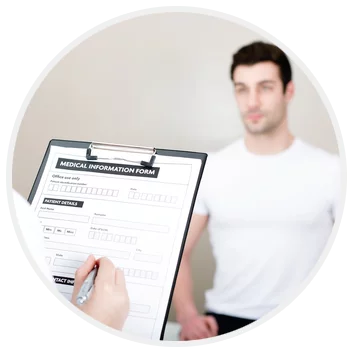
A candidate invited to “a medical” may reasonably expect a very different appointment from the one you have arranged. Tell them they are attending a functional assessment, name the job and explain the physical activities that prompted the referral. Someone applying to replenish parts bins, for example, can understand why a clinician wants to observe a lift to shelf height. They can also tell you if the invitation describes a different position from the one they discussed at interview. Sorting that out before the appointment gives the candidate and assessor a common starting point.
Give the candidate the confirmed venue, arrival instructions and a contact for practical questions. We can confirm what the candidate should wear or bring for their appointment. Pass those details on with the booking. If access to the room involves stairs or a long walk from reception, a description lets the person raise an access need privately. Make room for questions about equipment they ordinarily use at work or an adjustment they may need to take part. The hiring manager can coordinate the appointment while the person discusses relevant health information with the clinician.
During the consultation, the assessor can ask about prior injuries, movement and health matters relevant to the activities being considered. The physical component depends on the role. It might involve reaching to a nominated level, maintaining a working position or moving an object between two surfaces. The candidate should understand what they are being asked to demonstrate and have the opportunity to explain unfamiliar equipment or a difference from their experience of the job. If a movement causes symptoms or a task feels unsafe, they should tell the assessor at the time. The clinician can then decide how to proceed and what the observation means.
Before the candidate leaves, it helps if they know who will contact them about the next step. The employer can explain in advance why it has requested the report, who needs the work-related findings and where the person can direct a question about the referral. There is rarely a reason for every member of an interview panel to hear a private account of an old injury. Think about the information each recipient needs to do their part. A recruiter arranging a new appointment needs the practical booking details. The person comparing the findings with the job requires an accurate description of the duties and the conditions under which they were tested. Tell candidates which contact handles each type of question so they can choose where to raise it.
If you have staff in Victoria, our pre-employment assessments in Melbourne follow the same process.
Reading a functional assessment report fairly
Read the role description alongside the result. If a candidate demonstrated a carry over a short, clear route, the finding relates to that carry in those conditions. It gives the employer useful information about a comparable duty. It leaves open what might happen on stairs, over a longer distance or through a full shift of repeated carries. Where those differences matter to the job, ask the assessor what the result supports. An observation from a single appointment is most useful when everyone understands the question the clinician was asked to answer.
Consider a Perth parts distributor whose report raises a question about an occasional high shelf. First check what is stored there, who retrieves it and how the item is brought down. The operations lead may confirm that staff use an adjustable picking aid and that reaching the shelf unaided has never been a requirement of the position. Alternatively, the reach may be essential at one work point and take place several times a shift.
Those two findings call for different conversations. The assessor can clarify the relevance of the tested movement once the employer supplies the missing detail.
A previous injury is another detail that needs context. A history on its own tells the hiring team little about how a person currently performs a particular task. Look at the observed activity, any limits described by the clinician and the duties that genuinely belong to the job. If there is a difference, discuss whether a reasonable adjustment could allow the person to carry out an essential requirement. A change in the height at which parts are presented, for instance, might address a reach while preserving the work the position exists to do. Talk with the candidate about what would work for them and seek clarification where the clinical implications are unclear.
Keep the hiring decision with the people responsible for recruitment. The assessor reports on functional performance. The employer knows the role, the available adjustments and the other selection criteria. Record the specific question when you seek clarification. “Could the observed lift be applied to our waist-height picking bench?” is easier to answer than “Is this person fit?” If the report leaves an activity untested, record that the assessor has yet to observe it. A blank result can otherwise be mistaken for a finding about the candidate’s ability. Share the relevant findings with the people who need them for the recruitment decision and agree how sensitive material will be held. A supervisor organising equipment may need the setup details without needing the candidate’s clinical history.
Businesses recruiting in Queensland can arrange pre-employment assessments in Brisbane as well.

Arranging testing across Perth sites and shifts
Your first booking decision is where the assessment can be carried out properly. A clinic appointment may suit a single applicant if the agreed activities can be demonstrated there. A dedicated room at the workplace may be worth discussing when several candidates are being considered for the same role or when a feature of the job is hard to describe away from the site. Tell us which part of Perth the candidates will attend and where the work will actually take place. We can discuss the venue and testing requirements before you send anyone an appointment time.
For a workplace booking, think about what will be happening around the room. A consultation needs privacy, and a movement task needs the space and equipment agreed with the assessor. A meeting room beside a busy dispatch counter might work before deliveries start but have people walking through it later in the morning. Check who controls access, how a visitor signs in and whether the area can be reserved for the appointment. Let us know if the equipment that makes a task representative is elsewhere on site. These details affect whether the location suits the assessment.
When several vacancies share a recruitment campaign, separate the duties before grouping the bookings. A Perth depot may recruit a picker and a returns clerk at the same time. One might work along shelving for most of the shift while the other spends longer checking stock at a bench. Send both descriptions and identify the tasks they share. It may be possible to agree common components and a small number specific to each job. Equally, a day and night shift with the same title may need different descriptions if deliveries, available equipment or job rotation change between them. The most helpful person to check that detail is the supervisor on the relevant shift.
For a role shared between two depots, record which tasks belong to both and which depend on the site. A picker working from waist-height bins at one depot may have to reach into deep shelving at the other. Labelling the task by site gives the recruiter a way to use a common report without assuming the two workstations place identical demands on the person.
If a returning employee also needs an assessment, identify that referral separately. A new starter’s assessment concerns the job they are applying for. A return-to-work referral may need to address particular duties after an injury or illness. Keeping the two purposes clear helps the clinician choose appropriate tasks and helps the employer ask for a report it can use.
Name a contact at each site who can check the duties before the next intake. If shelving is moved or a new lifting aid arrives between bookings, the person organising the appointments needs to know. A dated description of the changed task gives the assessor something specific to review before another applicant is booked against the old setup.
For a quote, send the job title, a short description of its essential physical demands, the number of people to be assessed, your preferred suburb and any scheduling constraints. Keep personal medical material out of the initial enquiry. Request a quote for pre-employment functional assessments in Perth.